How SEO Correlation Data Informs Smarter Optimization Decisions
For years I chased ranking factors the way some people chase stock tips. I would read a blog post claiming that keyword density mattered, tweak my pages, and see nothing happen. Then someone would swear by meta keywords, and I would add those too. It was guesswork dressed up as strategy. The turning point came when I started looking at seo correlation data - not as a definitive answer, but as a way to narrow down what might actually be worth testing.
Correlation analysis in SEO is essentially a statistical measure of how closely two things move together. If high-ranking pages tend to have more backlinks, then backlinks and rankings have a positive correlation. That does not prove causation - a point that gets lost in too many discussions. But it does give you a starting point for forming hypotheses. Instead of throwing spaghetti at the wall, you can ask: is this ranking factor consistently associated with better positions for the queries I care about?
The Difference Between Correlation and Causation
Early in my career, I worked with a site that had a strong link profile but terrible content. The owner kept looking at Moz and Ahrefs reports showing that pages with more backlinks ranked higher. He assumed that building more links would fix everything. But the correlation was driven by competitors who had both good content and good links. His links were low-quality, and the content was thinner than a business card. The correlation data told him links mattered, but it did not tell him that context and relevance mattered more.
That is the trap of seo correlation data. It shows you patterns, not reasons. Google uses hundreds of signals, many of which interact in complex ways. RankBrain, Google's machine learning system, adapts search results based on user behavior, meaning that a ranking factor that correlates strongly in one niche might barely register in another. The data is a guide, not a rulebook.
What the Research Actually Shows
Over the years, studies from sources like Search Engine Land and various independent SEO experiments have pointed to a few consistent correlations. PageRank, even in its evolved form, still correlates with higher rankings. Pages with strong topic clusters - interconnected content around a core subject - tend to perform better. Core Web Vitals, particularly loading speed and mobile responsiveness, show a modest but real correlation with rankings. And search intent alignment correlates very strongly. If your page does not match what the user wants, no amount of optimization will save it.
But the picture gets murkier with factors like keyword difficulty. High keyword difficulty often correlates with high competition, but that does not mean you should avoid those terms. Sometimes a well-optimized page with strong authority can break through. Correlation data just tells you the odds are lower. It is a probability signal, not a wall.
How to Use Correlation Data Without Getting Fooled
I have learned to treat seo correlation data as a hypothesis generator, not a verdict. Here is a practical process that works for me:
- Start with a specific query or set of queries. Broad industry studies are interesting, but what matters is your niche.
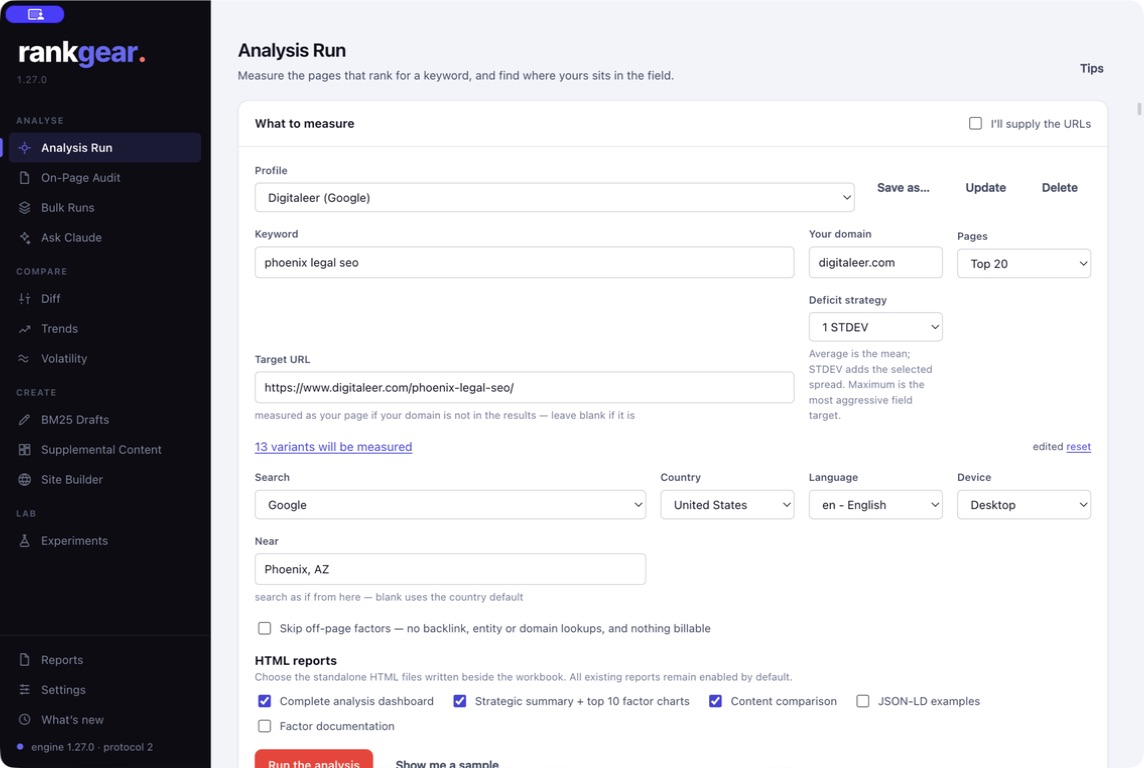
- Pull correlation data for ranking factors like backlinks, content length, and page speed. Tools like RankGear can help you see which factors actually move with rankings for your target terms.
- Form a hypothesis. For example: "Pages ranking for this term have an average of 50 referring domains and 2000 words of content. Let's see if matching those numbers helps."
- Run a controlled test. Change one thing at a time and monitor organic traffic through Google Search Console. If the hypothesis holds, scale it. If not, discard it.
- Document what you learn. Over time, you build a library of what actually works in your space, not what works in someone else's.
This approach keeps you grounded. You are not blindly following a number. You are using the number to ask better questions.
The Role of SERP Features and Intent
One of the most important shifts I have seen is how SERP features change the game. A query that triggers a featured snippet or a "People also ask" box changes what searchers expect. If your page ranks well but does not answer the question in a snippet-friendly format, you might see lower click-through rates even with a high ranking. Correlation analysis that ignores SERP features can mislead you into thinking your on-page SEO is fine when really the format is wrong.
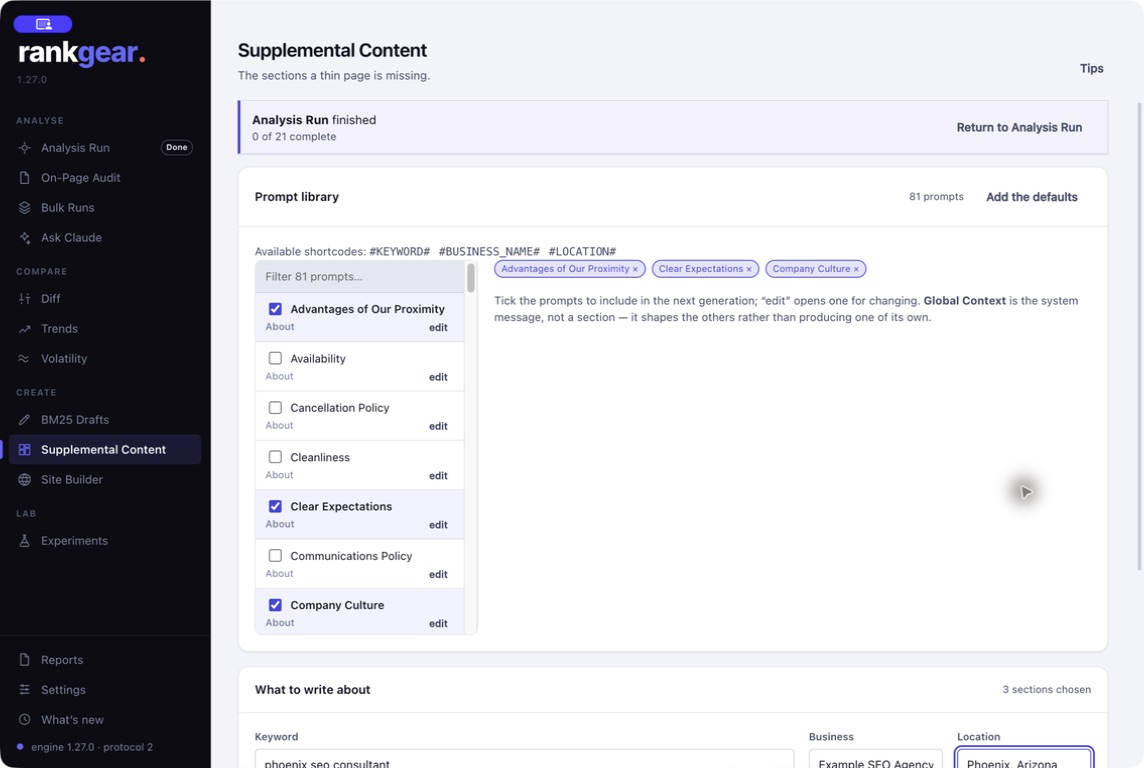
Search intent is even more foundational. If someone searches "best running shoes" they probably want a list, not a single product page. If your content gap analysis shows that competitors ranking for that term all use listicle formats, then the strongest correlation might be format, not backlinks. I have seen sites jump from page three to page one just by rewriting a single page to match the dominant intent pattern.
When Correlation Data Leads You Astray
Let me give you a concrete example from my own work. I was optimizing a site in the financial advice space. Correlation data from multiple tools kept pointing to page speed as a top factor. So I spent weeks compressing images, minifying CSS, and moving to a faster host. Rankings barely budged. Then I looked deeper and realized that the pages ranking highest had something else in common: they all cited authoritative sources and had detailed disclaimers. Speed mattered, but trust signals mattered more. The correlation data had shown speed because it was a common trait among fast, well-built sites, but it was not the driver.
That is why you cannot rely on any single study or tool. Moz, Ahrefs, and other platforms all publish correlation analyses, but their datasets differ. One might find that anchor text diversity correlates strongly; another might downplay it. The truth is that ranking factors are dynamic. Google updates its algorithms, user behavior shifts, and what worked six months ago might not work today.
Bringing It All Together with a Structured Approach
A healthier way to think about correlation data is as one input in a broader optimization cycle. Start with keyword difficulty and search intent to pick your battles. Use content gap analysis to find topics your competitors cover but you do not. Build topic clusters that establish authority. Then use correlation analysis to prioritize which technical or content changes to test first.
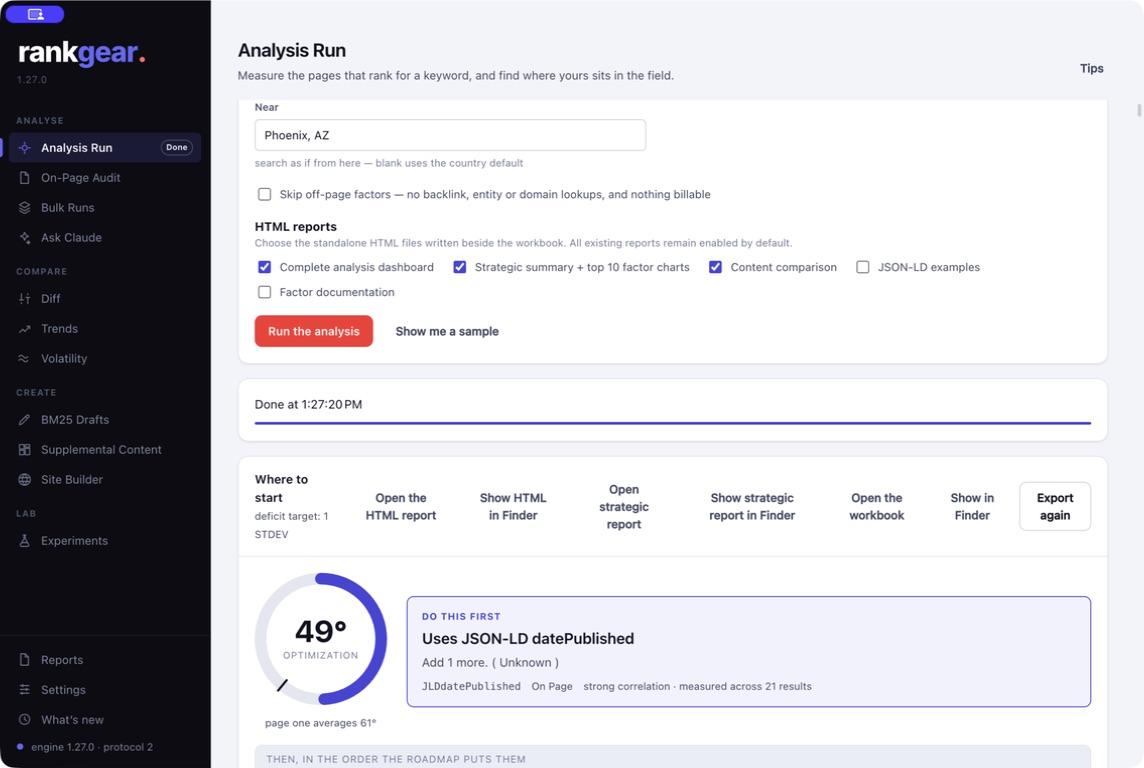
RankGear's approach fits this model well. It does not just hand you a list of ranking factors. It lets you see which factors correlate with rankings for your specific queries, so you can focus your experiments on what is likely to move the needle. That specificity is crucial. A general correlation study might tell you that backlinks matter for all keywords. But for your particular query, maybe content length or Core Web Vitals matters more. The closer you get to your actual context, the more useful the data becomes.
Final Thoughts on Staying Sane with Data
SEO has always been part art, part science. The science side has gotten stronger with better tools and more transparent SEO experiments. But the art - the judgment to know when a correlation is worth chasing and when it is a mirage - that is still on you. Use correlation data to inform your bets, not to place them for you. Keep testing, keep documenting, and never stop questioning the numbers. That is how you turn data into real organic traffic growth.